
Indore Food Culture: India's Ultimate Street Food Paradise
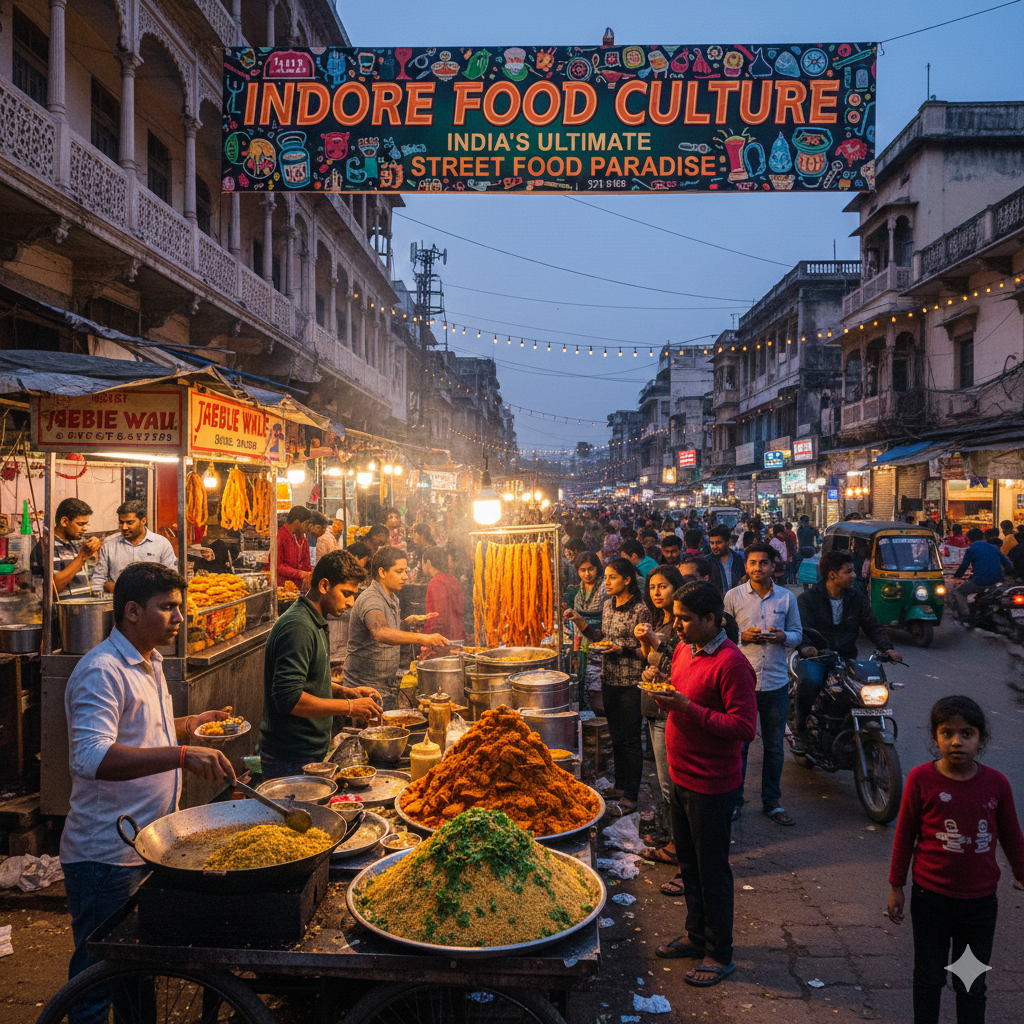
Indore isn’t just India’s cleanest city it’s a gastronomic wonderland where food isn’t merely sustenance but a way of life. As the commercial capital of Madhya Pradesh, this vibrant city has earned its reputation as a food lover’s paradise, where the streets come alive with aromas, flavors, and culinary traditions that blend influences from Gujarat, Rajasthan, and Maharashtra into something uniquely Indori.
From the legendary night market at Sarafa Bazaar to the bustling lanes of Chappan Dukan, Indore’s food culture is a celebration that never really ends.
The Breakfast of Champions: Poha-Jalebi
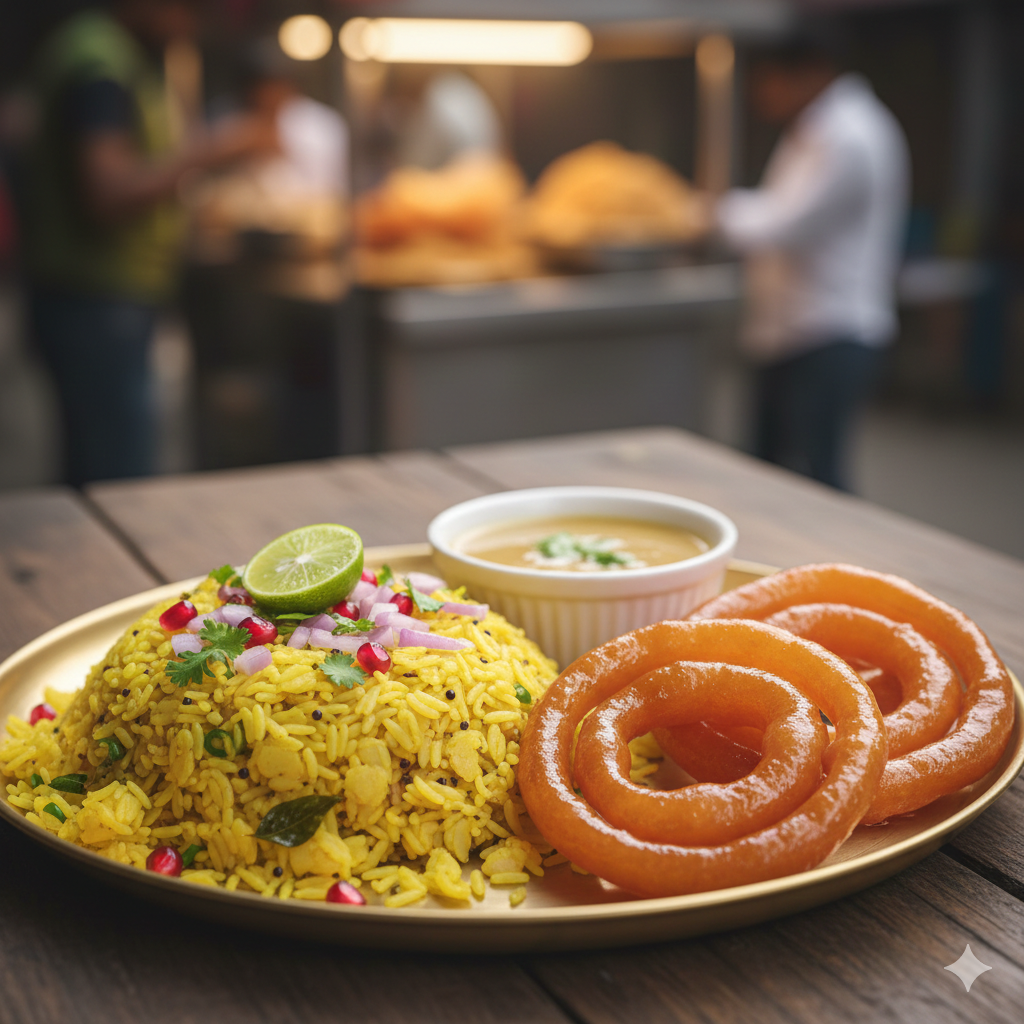
Ask any Indori what defines their city’s food culture, and they’ll immediately tell you about the iconic Poha-Jalebi combination. This isn’t just breakfast—it’s a beloved ritual that brings together the seemingly contradictory worlds of savory and sweet in perfect harmony.
Indore’s poha is lighter than the Maharashtrian version, using less oil and spices. The flattened rice is delicately spiced, topped with crunchy sev, fresh coriander, and chopped onions, and served with a wedge of lime. What makes this combination magical is pairing it with hot, crispy jalebis fresh from the kadai, their sugar syrup still glistening. The contrast between the subtle, tangy poha and the sweet, syrupy jalebi creates an experience that captures the essence of Indori food philosophy—bold, unapologetic, and utterly satisfying.
Young Tarang at Chappan Dukan serves what many consider the definitive version of this breakfast classic, drawing crowds every morning who wouldn’t dream of starting their day any other way.
Sarafa Bazaar: Where the City Never Sleeps Hungry
If Indore has a beating culinary heart, it’s Sarafa Bazaar. By day, this is a bustling jewelry market where gold and silver glitter in shop windows. But as dusk falls around 8 PM, something magical happens. The jewelry shops close their shutters, and the entire street transforms into what may be India’s only night food street, operating until 2 AM or later.
With over 100 food stalls lining the lanes, Sarafa becomes a sensory overload in the best possible way. The aroma of freshly fried snacks mingles with the sweet scent of desserts, vendors call out their specialties, and crowds of locals and tourists navigate the bustling lanes in search of their next bite. This isn’t just a food market it’s a cultural phenomenon that captures Indore’s spirit of celebration and community.

The Flying Dahi Bada Experience
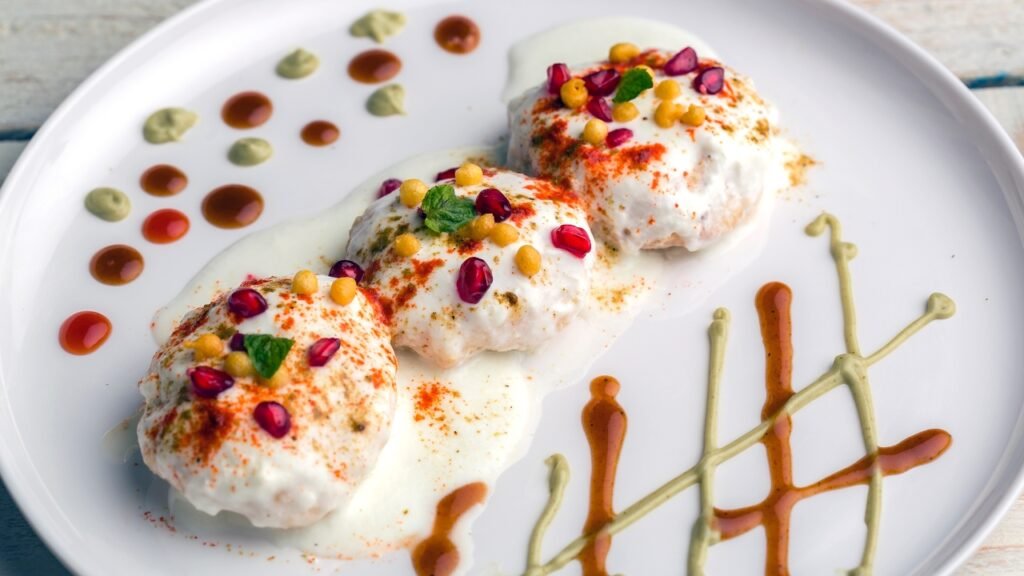
At Joshi Dahi Bada House in Sarafa, eating isn’t just about taste—it’s about theater. The preparation of their famous Dahi Bada involves tossing the vadas through the air, catching them with practiced precision, before dunking them in cool yogurt. The soft, pillowy badas are soaked in creamy yogurt, drizzled with sweet and tangy chutneys, and served with a sprinkle of roasted cumin. Watching the aerial acrobatics is half the fun, but the perfectly balanced flavors are what keep people coming back.
Garadu: Winter's Spicy Embrace
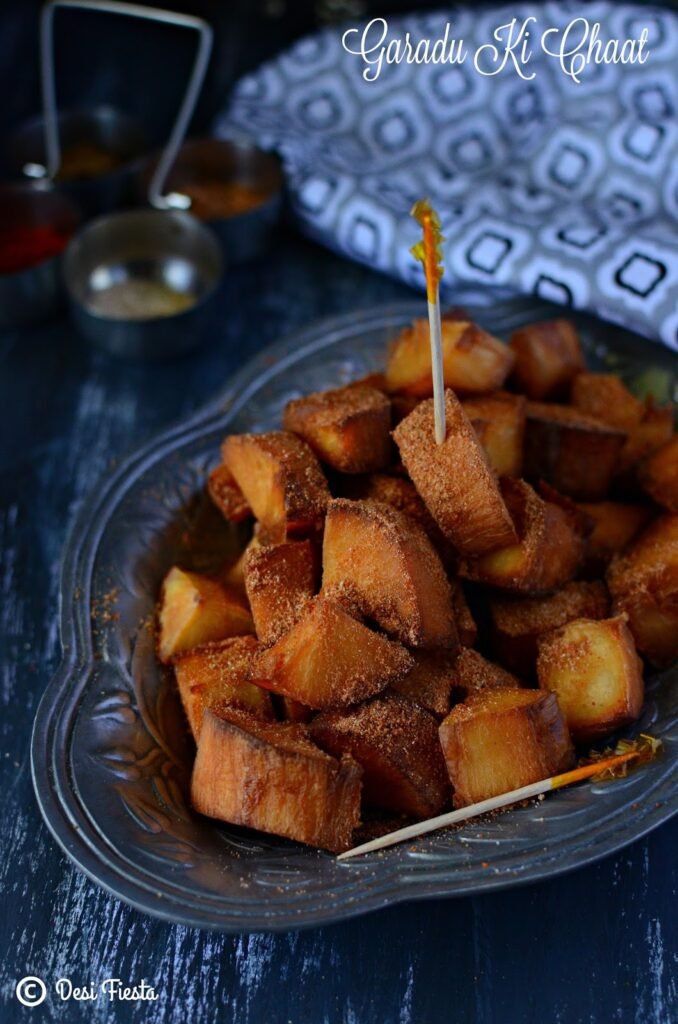
When winter arrives, Garadu becomes the snack of choice. Made from deep-fried yam, it’s spiced to perfection and crispy on the outside while tender on the inside. The secret lies in the special “Garadu masala”—a tangy, spicy blend that transforms humble yam into something extraordinary. Served with a squeeze of lemon and extra chaat masala, this seasonal specialty showcases Indore’s ability to elevate simple ingredients into memorable experiences.
Sabudana Khichdi: Beyond Fasting Food
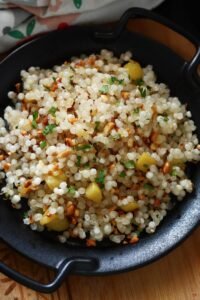
While sabudana (tapioca pearls) is commonly associated with fasting, Indore has transformed it into an everyday indulgence. At Sarafa, vendors like Sanvariya Seth mix the sago pearls with crispy potatoes, crunchy peanuts, generous amounts of namkeen, and a perfect balance of spices and lemon juice. The texture is the key here—soft pearls, crunchy nuts, and crispy sev all coming together in a dish that’s far more exciting than its humble ingredient list suggests.
Dal Bafla: The Malwa Masterpiece
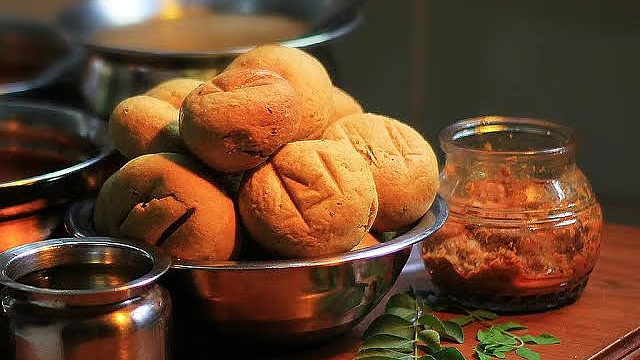
Dal Bafla is Indore’s answer to Rajasthan’s Dal Baati, but with a significant difference that makes it uniquely Malwa. Unlike Baati which is directly baked, Bafla is boiled first and then baked, making it extra soft. The wheat dough balls are first simmered in water, then baked until golden, crushed, and generously doused in ghee before being served with rich, flavorful dal.
The result is a dish that’s softer and more forgiving than its Rajasthani cousin, melting in your mouth while still delivering that satisfying, hearty experience. Hotel Rajhans and Hotel Santoor are famous for their Sunday Dal Bafla feasts, where locals gather for this indulgent meal that perfectly balances comfort and flavor.
The Sweet Side of Indore
The Grand Jaleba
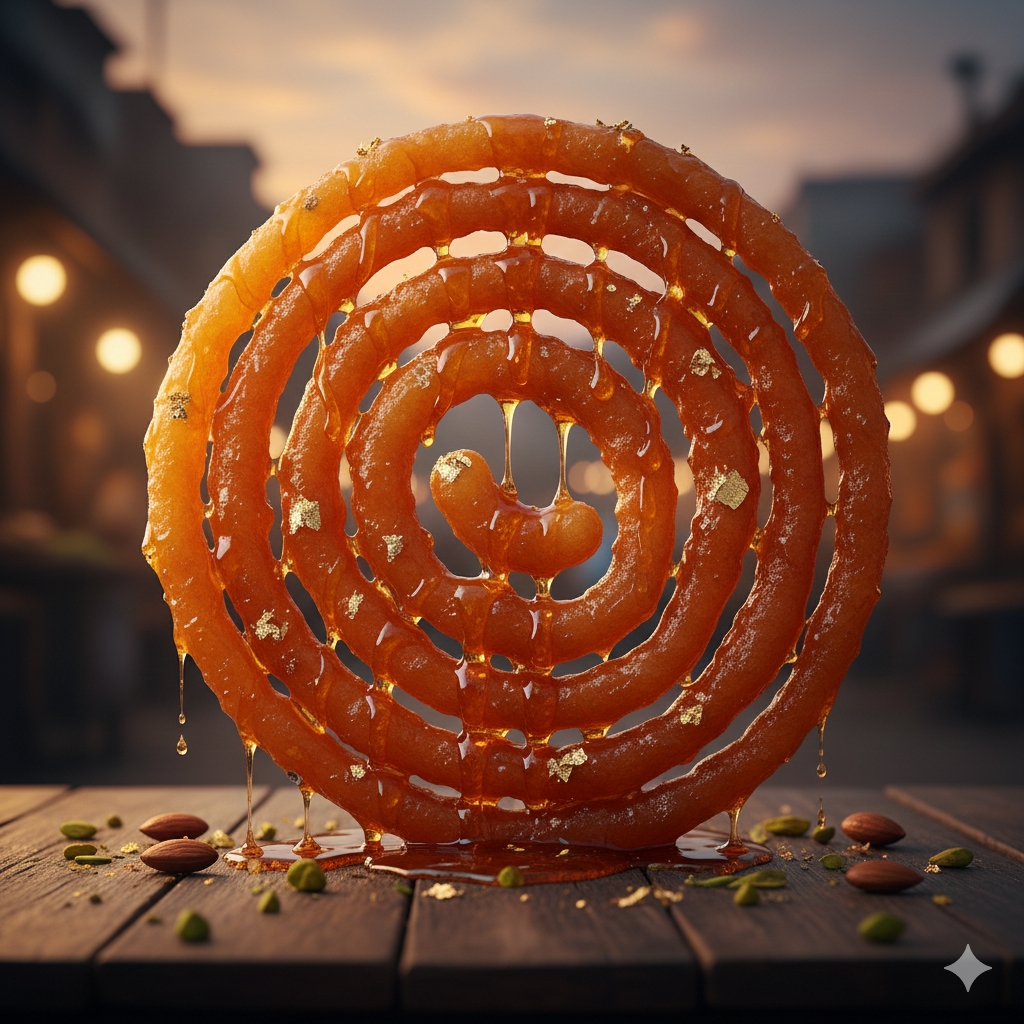
Forget everything you know about regular jalebis. Indore’s Jaleba (note the spelling) is the Big Daddy of all jalebis—a massive, syrup-soaked spiral that’s almost too big for one person to finish. Crispy on the outside, soft and gooey on the inside, these oversized treats are often served in hot milk during winter months, creating a dessert that’s both decadent and warming. During monsoon, some vendors serve jalebis with rabdi, adding a creamy, cardamom-scented dimension to the experience.
Malpua with Rabri
Golden brown malpuas displayed on huge tawas at Sarafa Bazaar are impossible to resist. These sweet pancakes are deep-fried to perfection and served with rich rabri (reduced, sweetened milk) and a sprinkle of nuts. Each bite delivers crunch, softness, and creamy sweetness in layers that make this the perfect end to a street food adventure.
Mawa Bati: Gulab Jamun's Rich Cousin
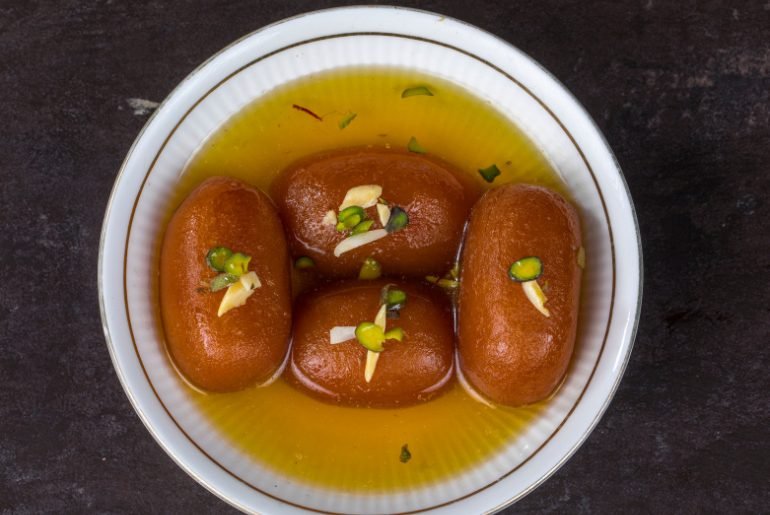
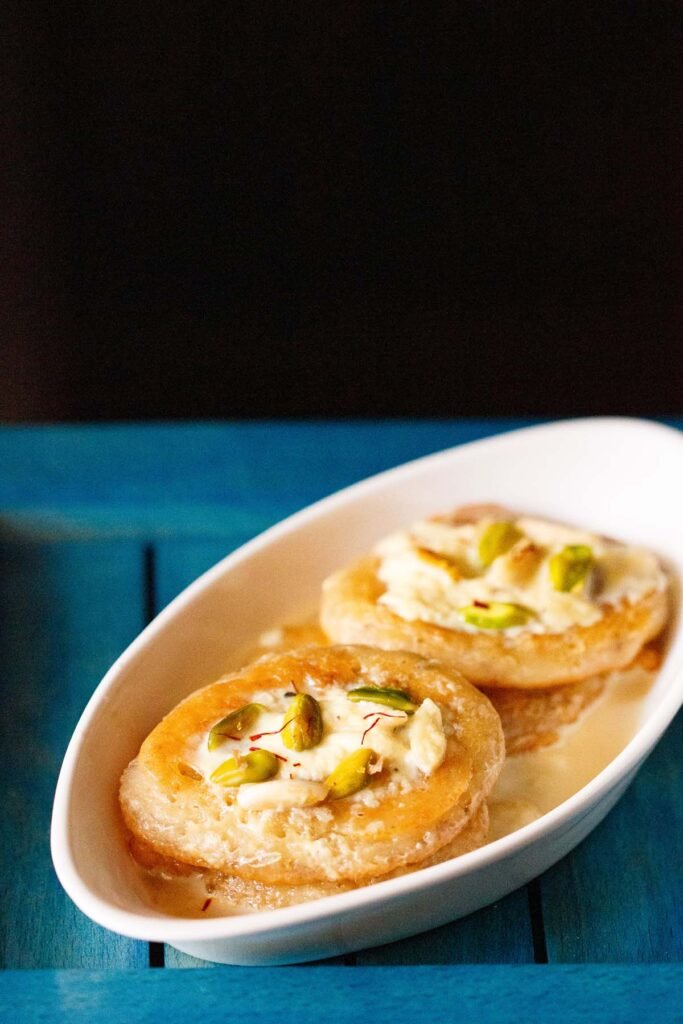
Think of gulab jamuns, then imagine them bigger, richer, and even more indulgent. That’s Mawa Bati—dense mawa (khoya) balls filled with dry fruits and nuts, deep-fried until golden brown, and lightly soaked in sugar syrup. Sometimes dusted with desiccated coconut, these treats are the definition of decadence.
Modern Indore: Fusion and Innovation
Egg Benjo: The Youth Favorite
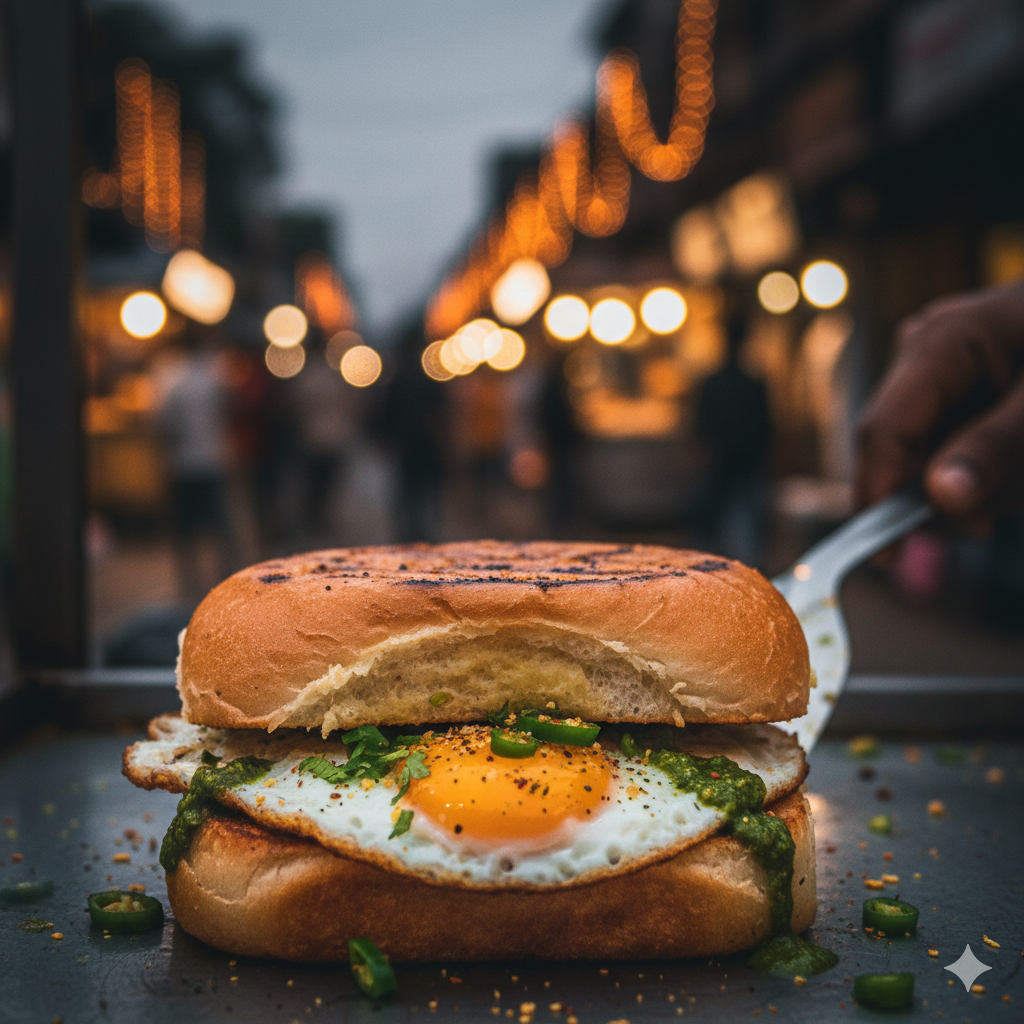
In a predominantly vegetarian food culture, the Egg Benjo stands out as a rare non-vegetarian favorite, especially among young people. A spicy masala omelette tucked between soft buns, served with chutney and ketchup, this simple creation has become a phenomenon. The mutton version offers even more flavor for the adventurous.
Johnny Hot Dog
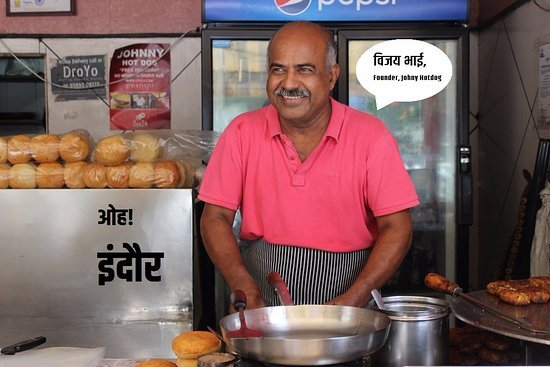
Vijay Singh’s Johnny Hot Dog has achieved legendary status, even winning recognition from Uber Eats as one of Indore’s most-ordered dishes. When given a choice between international chains and Johnny Hot Dog, locals choose the latter without hesitation—a testament to how Indore has made even borrowed dishes distinctly its own.
Planning Your Food Adventure
The best time to experience Indore’s food culture is between October and March when the weather is pleasant for evening and night explorations. Sarafa Bazaar comes alive around 9 PM, with peak hours between 10 PM and midnight. Arriving early ensures you get fresh preparations; staying late lets you soak in the vibrant atmosphere.
For a comprehensive experience, dedicate at least two full days one for Sarafa Bazaar’s night market magic, and another for Chappan Dukan’s laid-back offerings and exploring daytime specialties. Don’t be shy about asking locals for recommendations; Indoris love talking about food and will enthusiastically guide you to hidden gems.
Fair warning: Indori food is generally spicier than you might expect. Don’t ask your chaatwala to make things spicy unless you’re truly prepared their baseline spice level is already what most people would consider hot!
The Verdict
Indore’s food culture is not for the faint of heart or the calorie-conscious. It’s bold, unapologetic, and utterly addictive. From the morning ritual of Poha-Jalebi to the late-night adventures at Sarafa, from the comforting warmth of Dal Bafla to the crispy indulgence of Garadu, every dish tells a story of a city that lives to eat.
This is food that brings people together, that defines identity, that turns every meal into a celebration. It’s a cuisine born from the fusion of neighboring states but transformed into something distinctly Indori—innovative yet traditional, street-smart yet sophisticated, simple yet unforgettable.
Come to Indore for its cleanliness and historical monuments if you must, but stay for the food. Because once you’ve experienced the magic of Sarafa Bazaar at midnight, tasted the perfect Poha-Jalebi combination, and surrendered to the rich complexity of Bhutte Ka Kees, you’ll understand why Indoris are so passionate about their food. This isn’t just eating—it’s a way of life, and one bite is all it takes to become a believer.