
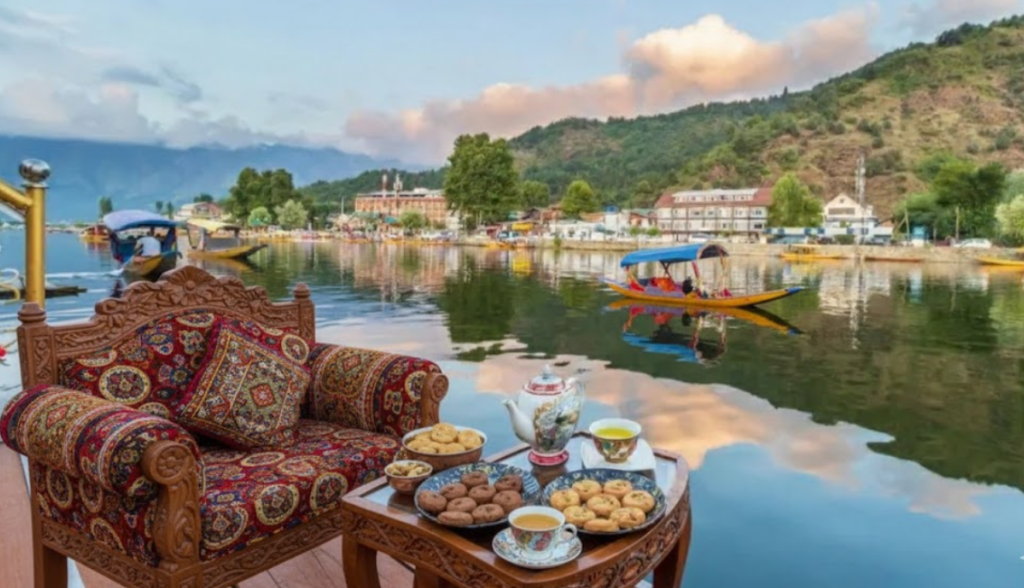
Jammu and Kashmir cuisine shaped the rhythm of my journey from the very beginning. This was not a trip guided by checklists or fast food stops. The cold air, quiet mornings, and long pauses between meals naturally slowed me down. Food here was never rushed—it was waited for, respected, and remembered.
This blog is not about eating everything quickly. It is about how Jammu & Kashmir cuisine revealed itself to me slowly—through warmth, patience, and tradition. Traveling for food here felt less like chasing flavours and more like listening to stories served on a plate.
Evenings in Jammu and the Street Food Culture
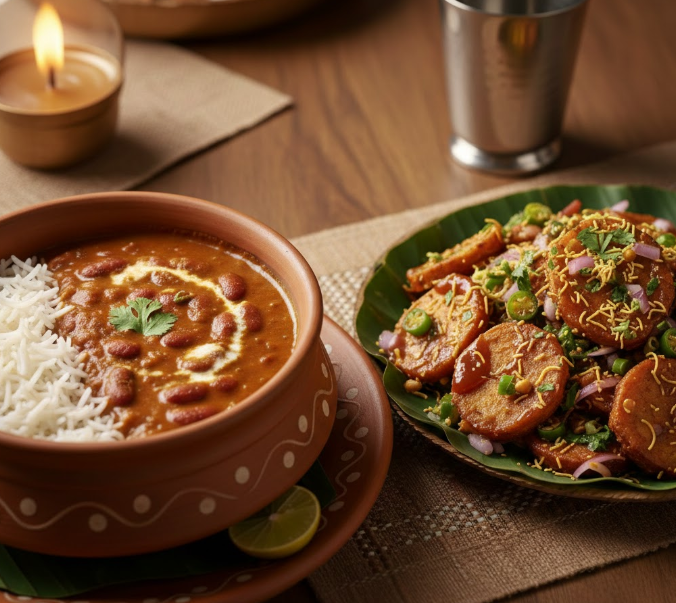
Evenings in Jammu have a calm rhythm. Markets are active, but not chaotic. Families walk together, shopkeepers chat, and food stalls quietly do their work.
I stopped at a stall selling kachalu chaat, made from boiled arbi mixed with spices, lemon, and chutney. It was spicy, tangy, and warming. Nearby, people were eating samosas, chole kulche, and golgappa—not in a hurry, but as part of their evening routine.
What stood out to me was that street food here felt shared. It wasn’t just something you ate alone. It was part of conversation, part of daily life.
Famous Street Food of Jammu
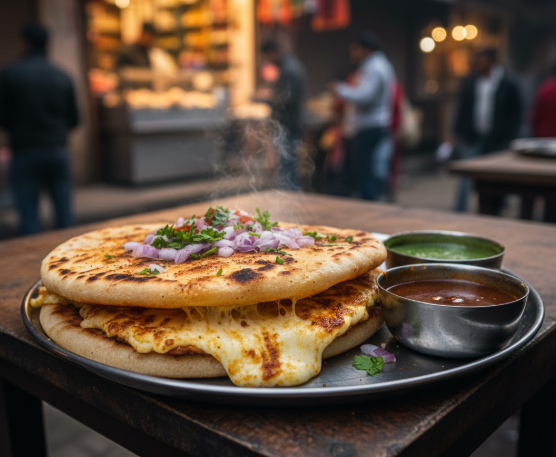
Kaladi Kulcha – Most famous Jammu street food. Local cheese (kaladi) is pan-fried and stuffed inside kulcha, served with chutney.
Rajma Chawal – Jammu-style rajma made with small red kidney beans, thick gravy, and lots of flavor.
Kachalu Chaat – Spicy and tangy chaat made from boiled colocasia (arbi), mixed with spices and chutney.
Aloo Chaat – Fried potato cubes tossed with salt, chili, lemon, and spices.
Gol Gappa (Pani Puri) – Popular street snack with spicy and tangy water.
Chole Bhature / Chole Kulche – Very common and loved street food in Jammu markets.
Samosa & Patisa – Crispy samosas and local sweet patisa often eaten together.
Bread Pakora – Bread stuffed with potato filling, deep fried and served hot.
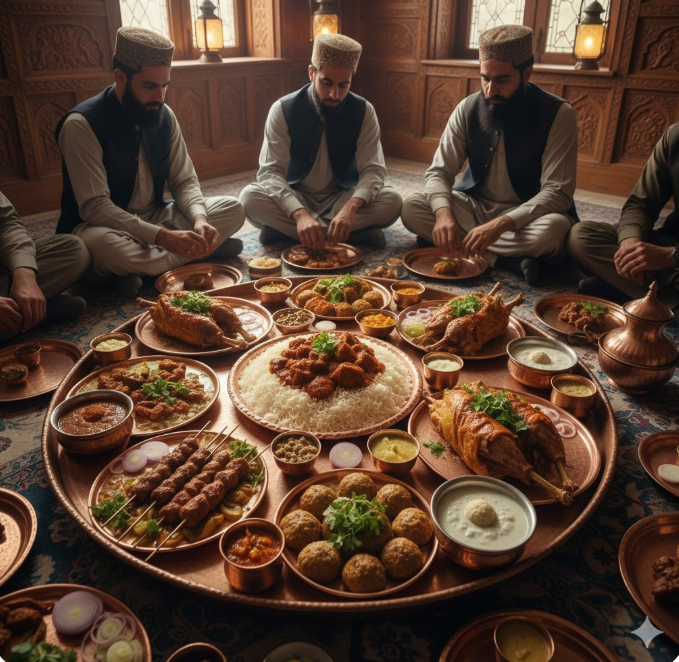
Traditional Jammu and Kashmir cuisine and the Idea of Wazwan
Food in Kashmir carries a sense of occasion. I heard a lot about Wazwan, the traditional multi-course meal prepared for weddings and celebrations. Even though I did not experience a full Wazwan, I tasted dishes inspired by it.
Rogan Josh was rich, deep in colour, and slow-cooked with spices that felt balanced rather than overpowering. Yakhni, made with yogurt and mild flavours, felt light and soothing. These dishes did not shout for attention. They spoke quietly and confidently.
Eating Kashmiri food made me realise that tradition does not need explanation. It explains itself through taste.
Street Food of Jammu and Kashmir Cuisine
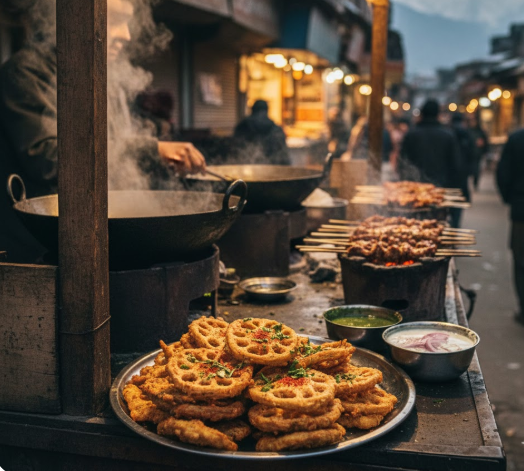
Street food in Kashmir is shaped by the climate. It is warming, filling, and seasonal.
One evening, I tried Nadru Monje, fritters made from lotus stem. They were crispy outside and soft inside, perfect for eating in the cold air. I also watched Tujj being prepared—meat skewered and grilled slowly over charcoal.
Tea, Bread, and Quiet Moments
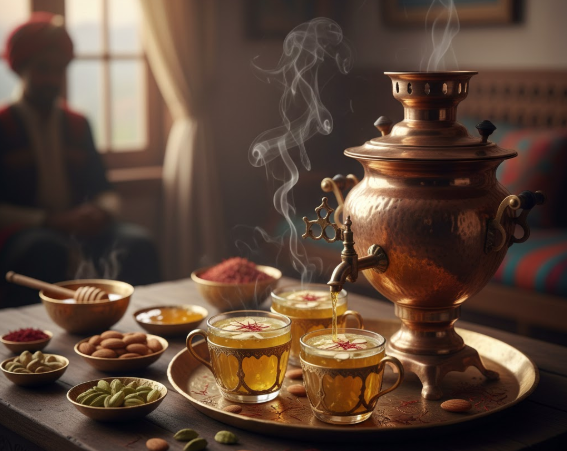
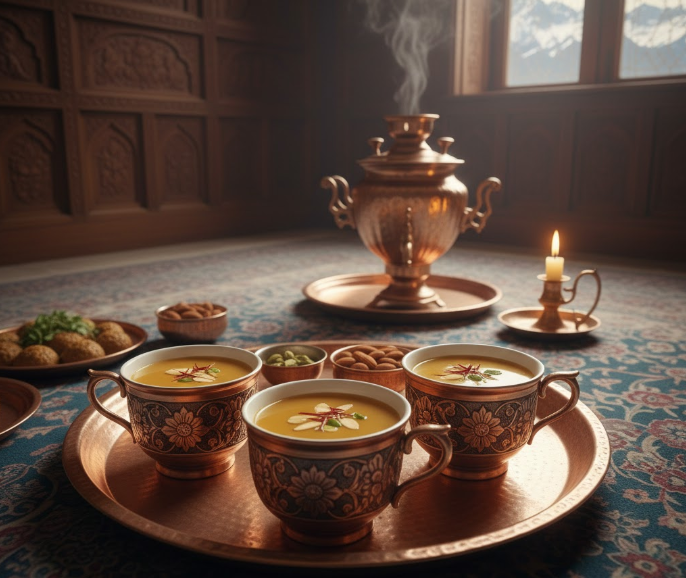
Tea plays an important role in jammu and kashmir cuisine, especially during long winters. Drinking kahwa, a green tea with saffron and almonds, became part of my daily routine. Holding a warm cup while sitting quietly felt grounding. I also tried noon chai, the famous pink tea, usually paired with local breads like girda.
These moments taught me that food does not always need to be exciting. Sometimes, it just needs to be present.
What Traveling for Food in Jammu & Kashmir Taught Me
Traveling for food in Jammu & Kashmir changed the way I look at food tourism. It showed me that food does not always need to be fast, loud, or trendy.
Sometimes, food is about waiting. About sitting quietly. About understanding a place through its rhythms.
Experiencing jammu and kashmir cuisine helped me understand the region beyound travel and scenery. To understand more about Indian regional food culture, you can explore information from the Incredible India tourism website.
If you truly want to understand Jammu & Kashmir, don’t just visit the places.
Eat slowly. Listen quietly. Let the food speak.